
Mapo Tofu: The Sichuan Dish Everyone Thinks They Know
Mapo tofu travels well because it looks easy to understand. But one name can mean Chengdu heat, Japanese mabo dofu, a vegan bowl, or a weeknight shortcut.
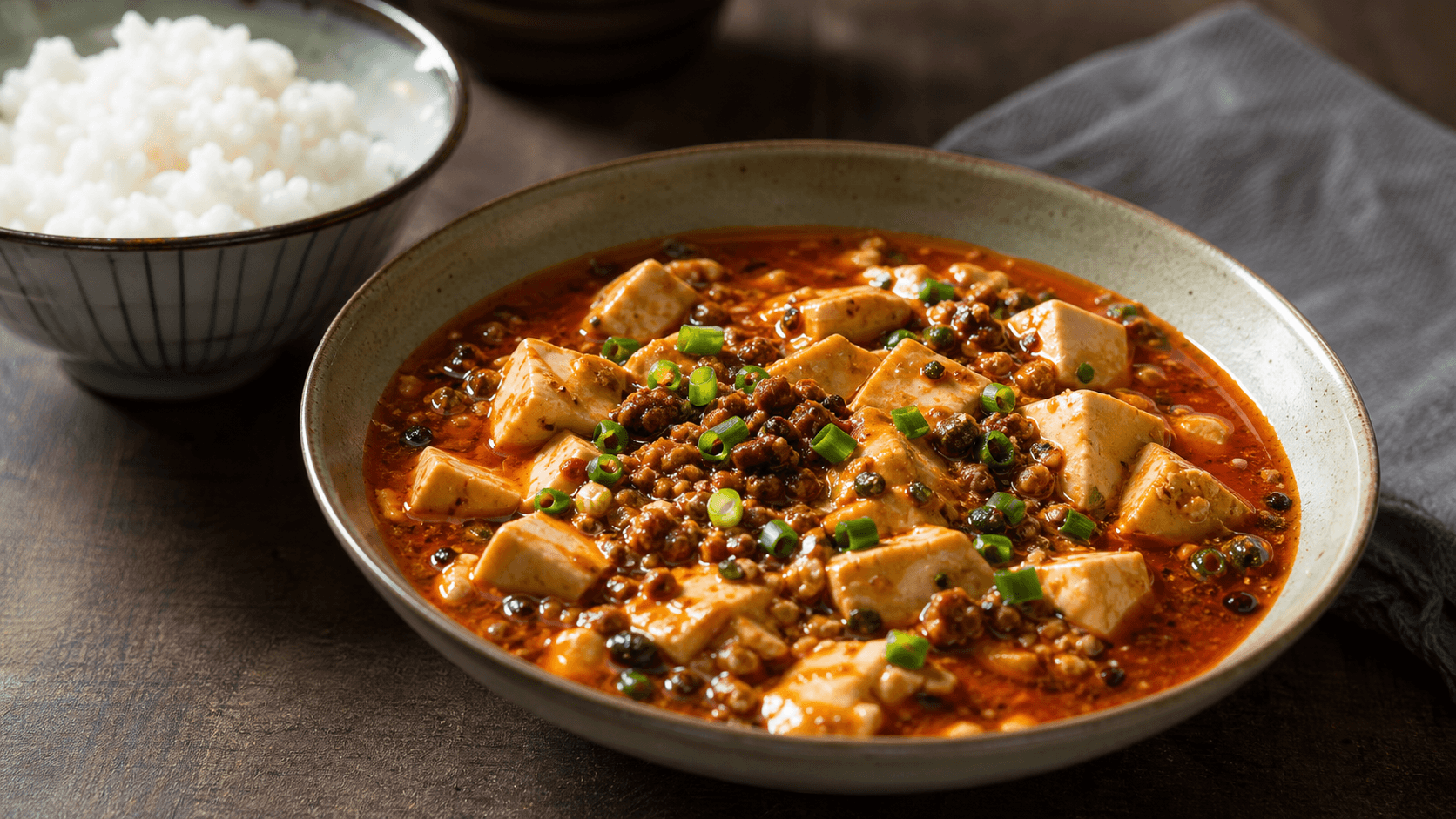
A dish everyone thinks they know
Mapo tofu is one of those dishes that travels well because it looks easy to understand.
A bowl of tofu. A red sauce. A little minced meat. Enough heat to stain the rice underneath.
Outside China, it usually appears on menus as “spicy tofu.” The translation is practical, but it cuts the dish in half. A good mapo tofu is not built on spice. It is built on sequence: the give of silken tofu, the dark salt of fermented beans, the brightness of chili oil, then a slow electric tingle from Sichuan pepper — and finally the rice, which is not a side dish but a destination.
This is why two people can both claim to know mapo tofu and be talking about entirely different things.
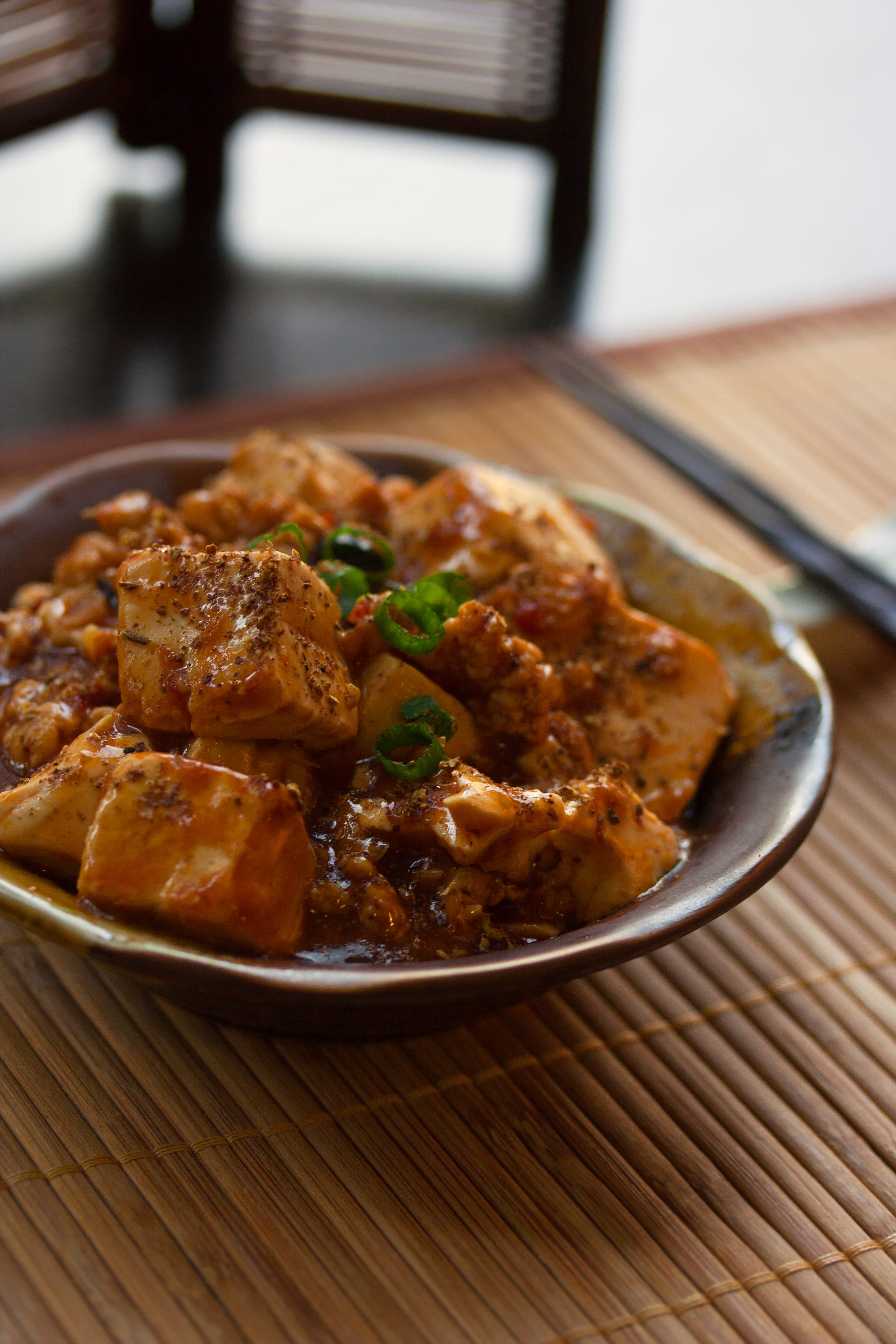
A dish with meat. Not a meat dish.
The first surprise for many vegetarians: mapo tofu is not automatically vegetarian.
Tofu sits at the center, but the traditional version includes minced meat — usually beef in Chengdu, often pork abroad. The portion is small. The role is not.
The meat here is nothing like stew meat. It does not fill the bowl; it seasons it. Fried until dry and fragrant, it gives the sauce texture and grain. It catches the chili oil. It interrupts the soft tofu with something earthy and distinct.
This is the part most weak vegetarian versions miss. Dropping the meat is easy. Finding something that does what the meat does is harder.
A good meatless mapo tofu still needs weight. Finely chopped mushrooms can provide it. So can fermented black beans, or a doubanjiang base cooked low and slow with ginger and garlic until it loses its rawness and opens into something darker. What the dish needs is not meat, specifically. It needs a sauce with enough body and grip to cling to soft tofu and mean something.
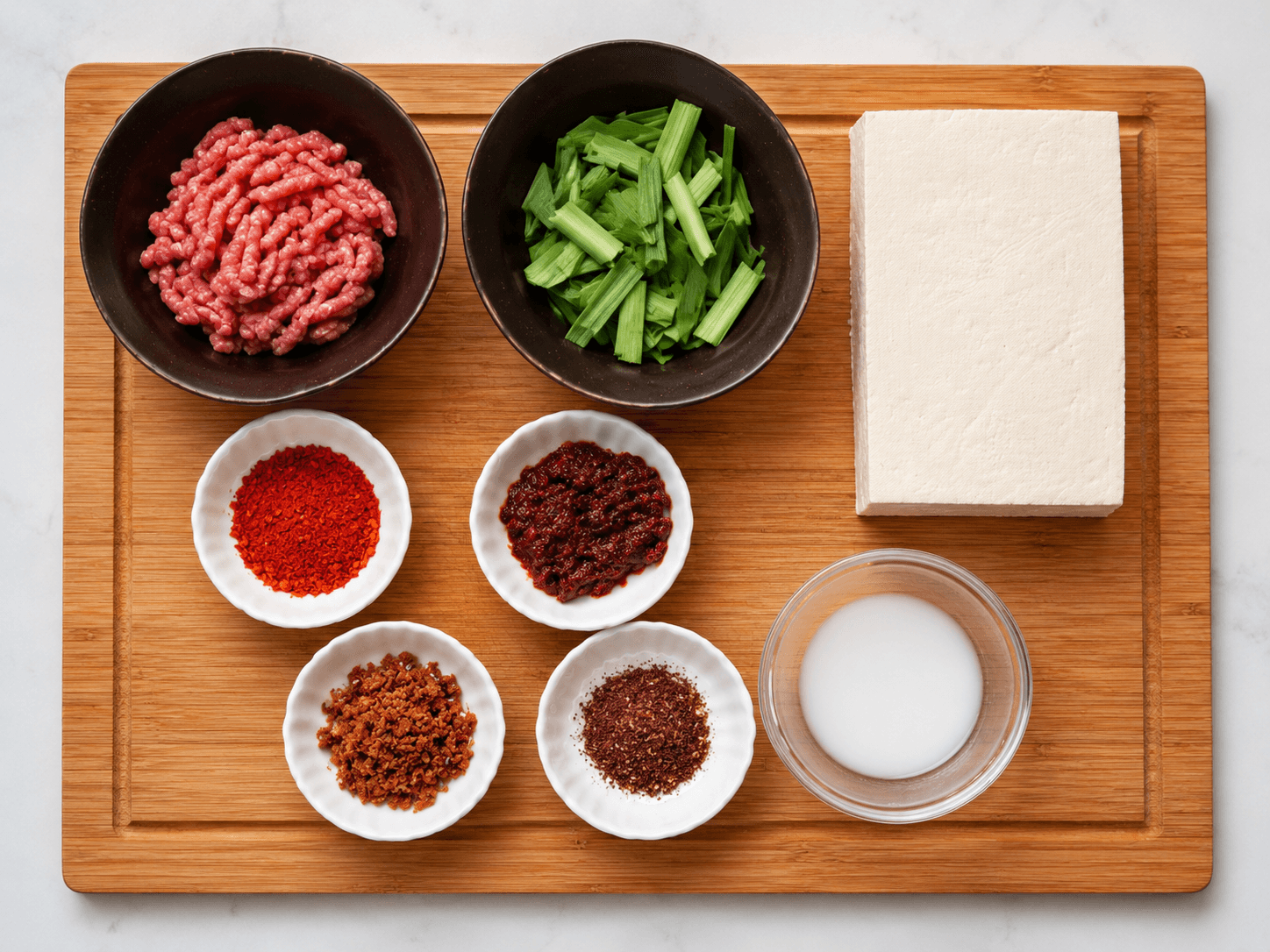
The grammar of mala
Mala — two syllables that carry all of Sichuan flavoring in miniature.
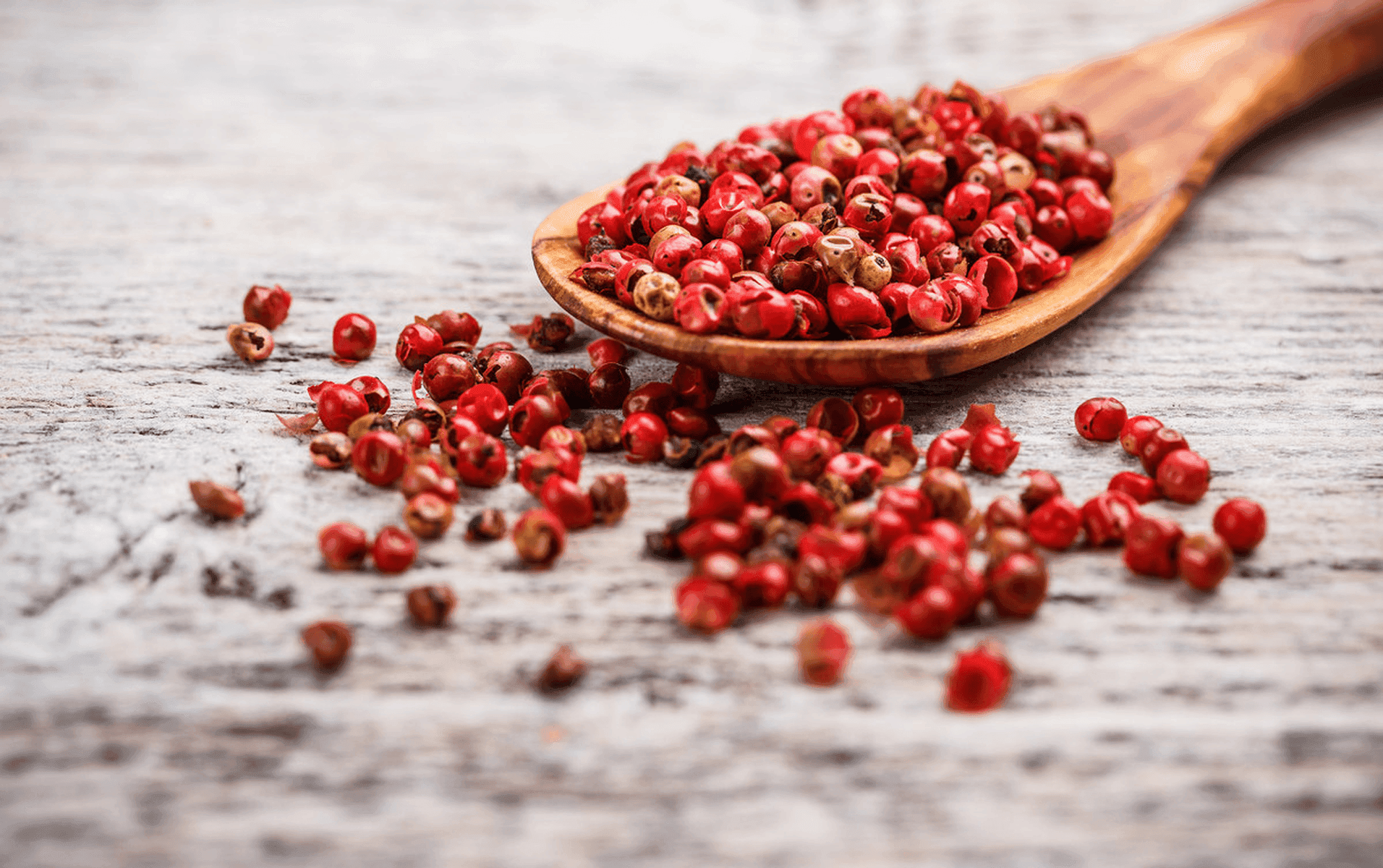
Most first-time encounters go in the wrong order. Diners understand la first: the familiar heat of chili. Ma is stranger. It comes from Sichuan pepper. It does not burn. It buzzes — a light, spreading numbness across the tongue and lips, as if the food were very slightly electrified.
In a well-made mapo tofu, mala is not the point of the dish. It is the structure.
Chili gives warmth and color. Sichuan pepper gives lift. Fermented bean paste gives the dark, low note underneath. Tofu absorbs and carries all of it. Rice closes the sentence.
Without the Sichuan pepper, the dish becomes ordinary spicy tofu. Without fermented paste, it is chili sauce poured over protein. Without high heat — both in the wok and in the bowl at the table — the sauce loses its edge. These are not stylistic variations. They are the difference between mapo tofu and something that shares a name.
This is why the dish makes such a reliable test. It is famous, cheap, and common. But it will show you quickly whether a kitchen actually understands Sichuan flavor.
The old standards still work
Traditional descriptions of mapo tofu in Chinese often compress into a short list of words: numbing, spicy, hot, fragrant, crisp, tender, fresh. Some versions add one more — huo, alive, referring to the way the sauce and oil seem to keep moving in the bowl.
These are more useful than they sound.
Numbing means the Sichuan pepper is actually present, not decorative. Spicy means the chili has force, not just pain. Hot means temperature — mapo tofu should arrive close to scalding, because heat is part of the flavor. Fragrant means the chili oil and fermented paste were cooked long enough for their aroma to open up. Crisp refers to the browned meat or its substitute, fried dry enough to have texture of its own. Tender belongs to the tofu — intact on the spoon, yielding in the mouth. Fresh does not mean light. It means the sauce has clarity and life, not just salt and oil accumulated in a wok.
The list sounds simple because it is. But simplicity at this scale leaves nowhere to hide.
Why the world rewrote it
Mapo tofu crossed borders because it could survive translation. Unlike dishes that depend on one very particular ingredient or a technique that does not travel, mapo tofu has a logic that can be rebuilt in different kitchens.
In Japan, it became マーボーどうふ (mabo dofu): milder, thicker, a weeknight staple eaten by children. In North America and Europe, it landed in Chinese restaurants in dozens of versions — sometimes fiery, sometimes barely spiced, sometimes vegetarian, sometimes a brown sauce with chili added at the end.
Short-form video pushed it further still. Mapo tofu over udon. Mapo tofu as chili mac. Mapo tofu with pantry substitutes. Some versions would puzzle a Chengdu cook. But they spread for a reason: the dish has a strong internal skeleton.
Soft base. Savory, fermented sauce. Heat from chili. Numbing from pepper — if the cook respects that part. Something starchy underneath.
Once you understand that skeleton, mapo tofu stops being a recipe and becomes a flavor system. The specific ingredients are less fixed than the relationships between them.
That may be why people argue about it. The dish is famous enough to feel like common property, but specific enough to expose every careless change.
What to look for
A good mapo tofu does not need to look impressive.
The tofu should be cut evenly — soft, but not dissolving. The sauce should be red, but not only red: underneath the chili oil there should be something darker, slower, fermented. Garlic and ginger should be in there somewhere, not as visible chunks but as background. The oil should not sit decoratively on the surface. It should carry aroma.
The first spoonful should be hot. Then salty. Then spicy. Then, a moment behind, the Sichuan pepper. The tofu should settle the sauce without neutralizing it. The rice should feel necessary.
If the dish is vegetarian, the question is not whether the meat is missing. The question is whether anything has taken its place — in texture, in depth, in the small dry grain that holds the sauce together. If the answer is yes, the bowl still deserves the name.
A dish with a memory
Mapo tofu is not a fixed object. It is a dish with a memory.
It remembers Chengdu. It also remembers every kitchen that changed it — every new pantry, every different table, every cook who had to work without one ingredient and found something else.
Some versions are sharper. Some softer. The best ones, regardless of route, return to the same basic promise: soft tofu, trembling slightly, under a red and fermented and numbing sauce. Rice waiting close by.
Everyone thinks they know mapo tofu.
The question is: which version do they know?
Find classic and meatless versions in Berlin.
Turn the story into your next meal
Use the restaurant map to find the dish, nearby Chinese restaurants and current offers.
Further questions
What is mapo tofu?
Mapo tofu is a Sichuan dish made with soft tofu, doubanjiang, chili oil, Sichuan pepper and usually a small amount of minced meat. The dish is not defined by heat alone; it depends on fermented bean paste, numbing Sichuan pepper and tofu that carries the sauce.
Is mapo tofu vegetarian?
Traditional mapo tofu is usually not vegetarian because it includes minced beef or pork. A good vegetarian or vegan version needs another source of texture and depth, such as finely chopped mushrooms, fermented black beans or a deeply cooked doubanjiang base.
Why is Sichuan pepper important in mapo tofu?
Sichuan pepper gives mapo tofu its ma, or numbing quality. Without it, the dish often becomes ordinary spicy tofu. The peppercorns create the tingling structure that balances chili heat, fermented bean paste and soft tofu.
How do I find mapo tofu in Berlin?
In Berlin, search for both “mapo tofu” and “vegan mapo tofu” depending on dietary needs. For a Sichuan-style version, look for restaurants that mention Sichuan food, mala, doubanjiang or Sichuan pepper rather than only listing spicy tofu.